Most people associate core training with planks, crunches, or sit-ups. At enduraLAB, some of our favorite core exercises involve something much simpler: picking up something heavy and walking with it.
Loaded carries are a regular part of our strength and conditioning programs because they develop multiple physical qualities at once. Grip strength, trunk stability, posture, coordination, and muscular endurance all come into play when the body is challenged to move under load.
The concept is simple, but the training possibilities are extensive. By changing how an athlete holds a weight, where the load is positioned, and how far or how long they carry it, we can create very different demands on the body.
We train this way because strength should extend beyond the gym. Carrying groceries, moving luggage, hauling a bag of mulch, or picking up a child all require the ability to stabilize the body while managing an external load.
Your Core Is Designed to Resist Movement, Too
When we think about abdominal exercises, we often picture movements that involve bending or rotating the spine. However, one of the core’s most important responsibilities is preventing unwanted movement.
Your abdominal muscles, obliques, spinal stabilizers, and surrounding musculature work together to control your trunk as your arms and legs move. This stability helps transfer force between the upper and lower body and allows you to maintain control when carrying something heavy.
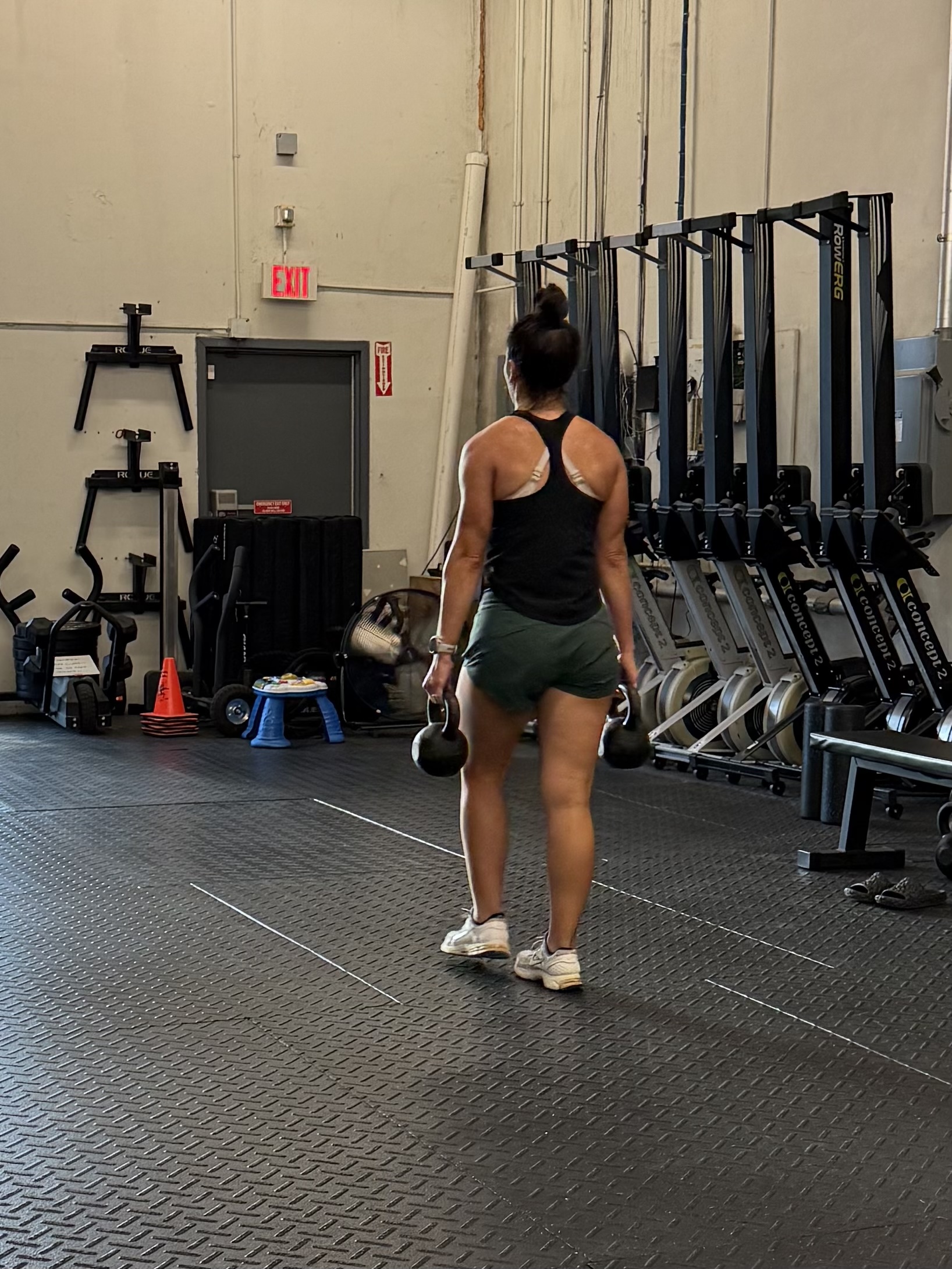
Consider a suitcase carry. Holding a heavy kettlebell in one hand creates an uneven load that naturally wants to pull the body toward one side. Your trunk muscles must work to resist that movement while your hips stabilize your pelvis and your legs continue walking.
Every step challenges your ability to maintain control.
Research examining loaded carries has demonstrated meaningful activation of the trunk musculature during farmer’s and suitcase carries. These findings help explain why carries are useful tools for challenging core stability, although muscle activation alone does not establish long-term strength or muscle-growth outcomes.
Why We Train So Many Different Carries
At enduraLAB, we don’t limit our athletes to one or two carrying exercises. We use a wide range of variations because the position and shape of the load influence how the body must respond.
A farmer’s carry with heavy dumbbells challenges grip endurance and total-body stability. A suitcase carry introduces an uneven load, increasing the demand to resist lateral trunk movement. Front-rack and overhead carries change the requirements placed on the shoulders, upper back, and trunk.
We also incorporate pinch grip carries, which challenge the fingers and thumb differently from gripping a traditional handle. Sandbag bear hug carries introduce an awkward load held in front of the body, requiring the athlete to maintain position while the weight shifts.
Other variations might involve kettlebells, dumbbells, weight plates, sandbags, or combinations of different loads.
The equipment is only part of the equation. We can also manipulate distance, time, weight, and carrying position to create the desired training stimulus.
Our coaches select these variations intentionally. An athlete who needs to improve grip endurance may benefit from a different carry than someone working on trunk control, shoulder stability, or the ability to manage an awkward object.
The goal isn’t to make an exercise complicated. It’s to create an appropriate challenge that develops a useful physical ability.
Carries Train Posture Under Load
Posture is often discussed as something we need to correct, but we view it as something we can strengthen.
Standing tall without resistance is different from maintaining control while carrying a challenging load. As the weight increases or fatigue develops, the body must coordinate the shoulders, rib cage, pelvis, and hips to keep moving efficiently.
During carries, our coaches look for controlled steps, steady breathing, and the ability to maintain trunk position without excessive leaning, shrugging, or compensation.
We’re not trying to make our athletes rigid. We want them to develop the strength and awareness to maintain control while adapting to different physical demands.
This is especially valuable because everyday life rarely places us in perfectly balanced positions. We carry bags in one hand, lift awkward objects, and move through environments that require constant adjustments.
The Connection to Muscle and Bone Health
As we age, maintaining muscle mass and strength becomes increasingly important. Age-related declines in these qualities can affect balance, mobility, physical function, and the ability to perform everyday activities independently.
Progressive resistance training is one of the most effective ways to challenge those declines.
Loaded carries recruit muscles throughout the body. The hands and forearms maintain grip, the shoulders and upper back support the weight, the trunk stabilizes the spine, and the lower body moves the load across the floor.
Depending on the variation, weight, and duration, carries can challenge muscular strength, endurance, and coordination. They also allow us to progressively increase physical demands as an athlete becomes more capable.
Bone health is another important consideration.
Bones respond to mechanical loading, and appropriately prescribed resistance training can help maintain or improve bone mineral density. Research supports progressive resistance exercise as part of a comprehensive approach to skeletal health, particularly in older adults.
Loaded carries add external resistance to walking and create weight-bearing demands, making them a useful complement to a strength program. However, research directly demonstrating that loaded carries alone increase bone density remains limited.
This is one reason we combine carries with squats, deadlifts, lunges, presses, and other resistance exercises. Each movement provides a different stimulus, and together they help develop a more complete foundation of strength.
Why Carries Become More Valuable as We Age
The importance of physical strength becomes increasingly apparent when everyday tasks begin to feel difficult.
Carrying luggage through an airport, lifting groceries into the car, moving furniture, or working in the yard all require more than isolated muscle strength. They require grip, balance, coordination, trunk stability, and the ability to sustain effort while moving.
For a younger athlete, loaded carries may help develop the physical qualities needed for sports performance. For an older athlete, those same exercises can contribute to maintaining the capacity and confidence needed for daily activities.
We don’t believe these goals are mutually exclusive. The strength that supports athletic performance today can also help establish the physical reserve we want to preserve later in life.
At enduraLAB, our goal is to help athletes continue doing the activities they enjoy, whether that’s competing in a race, playing golf, traveling, gardening, or keeping up with their grandchildren.
Strength You Can Carry Into Life
Loaded carries aren’t complicated, and that’s part of what makes them so effective.
They can be adjusted for almost any training level, incorporated into strength sessions or conditioning workouts, and progressed as an athlete develops. More importantly, they challenge the body to work as an integrated system rather than a collection of isolated muscles.
We don’t train carries simply to see who can hold the heaviest dumbbells or walk the farthest distance. We train them because they develop strength that has a purpose.
The goal is to build a body capable of handling the demands of life, today and for decades to come.
Want to improve your core strength, grip, and overall movement capacity? At enduraLAB in Fort Worth, our coaches use individualized assessments to identify strengths, limitations, and opportunities for improvement. Assessments are included in our memberships.
Talk to a coach and discover how purposeful strength training can help you move better, get stronger, and stay capable as you age.
Research & References
- Loaded Carry Muscle Activation (2024). Research examining trunk muscle activation during loaded carry variations. PubMed PMID: 38665162
- Resistance Training and Aging (2025). Systematic review and meta-analysis examining resistance training outcomes in older adults. PubMed PMID: 39405023
- Resistance Training and Bone Mineral Density (2022). Systematic review and meta-analysis examining the effects of resistance training on bone health in older adults. PubMed PMID: 35742181
Frequently Asked Questions About Loaded Carries
Do loaded carries actually strengthen your core?
Yes. Loaded carries challenge your core muscles to stabilize your spine and control your trunk while you move under resistance. Unlike crunches or sit-ups, carries emphasize resisting unwanted movement. Different carrying positions challenge the abdominal muscles, obliques, and spinal stabilizers in different ways, making them a valuable addition to a comprehensive core-strengthening program.
Are farmer’s carries better than planks for core strength?
Neither exercise is inherently better. They train core stability differently. Planks challenge your ability to maintain position while stationary, whereas farmer’s carries require you to maintain stability while walking under load. At enduraLAB, we incorporate both static and dynamic core exercises to develop well-rounded trunk strength and control.
How heavy should loaded carries be?
The appropriate weight depends on the athlete’s strength, experience, and training objective. A heavier carry over a shorter distance may emphasize strength, while a lighter carry over a longer distance may emphasize muscular endurance. At enduraLAB, our coaches prioritize posture, breathing, and movement quality before increasing resistance.
Can loaded carries improve grip strength?
Yes. Loaded carries require sustained gripping effort, which challenges the muscles of the hands and forearms. Different variations develop different gripping abilities. Farmer’s carries challenge support grip, while pinch grip carries place greater emphasis on the fingers and thumb. We use multiple variations because strong, capable hands are important for lifting, sports, and everyday activities.
Do loaded carries help build muscle and strengthen bones?
Loaded carries create resistance that challenges muscles throughout the body and can contribute to muscular development when appropriately progressed. They also introduce additional weight-bearing demands. While resistance training has demonstrated benefits for bone mineral density, direct research on the bone-building effects of loaded carries specifically is limited. Carries are best used alongside other progressive strength exercises.
Are loaded carries safe for older adults?
Loaded carries can be appropriate for older adults when selected and progressed according to individual abilities. They challenge grip, balance, trunk stability, and muscular endurance, all of which contribute to everyday physical function. At enduraLAB, we modify the equipment, weight, carrying position, and distance based on each athlete’s assessment and training needs.
How often should you train loaded carries?
For many athletes, incorporating carries two or three times per week can be a practical starting point, depending on overall training volume and recovery. Carries can be included in strength workouts, conditioning sessions, or dedicated grip and core training. The ideal frequency depends on the athlete’s goals, experience, and ability to recover.
Why does enduraLAB use so many different carry variations?
We believe strength should be adaptable. Carrying a kettlebell at your side creates different demands than holding a sandbag against your chest or supporting a weight overhead. By changing the load, position, grip, and distance, our coaches can develop specific physical qualities while preparing athletes for the unpredictable demands of sports and everyday life.

